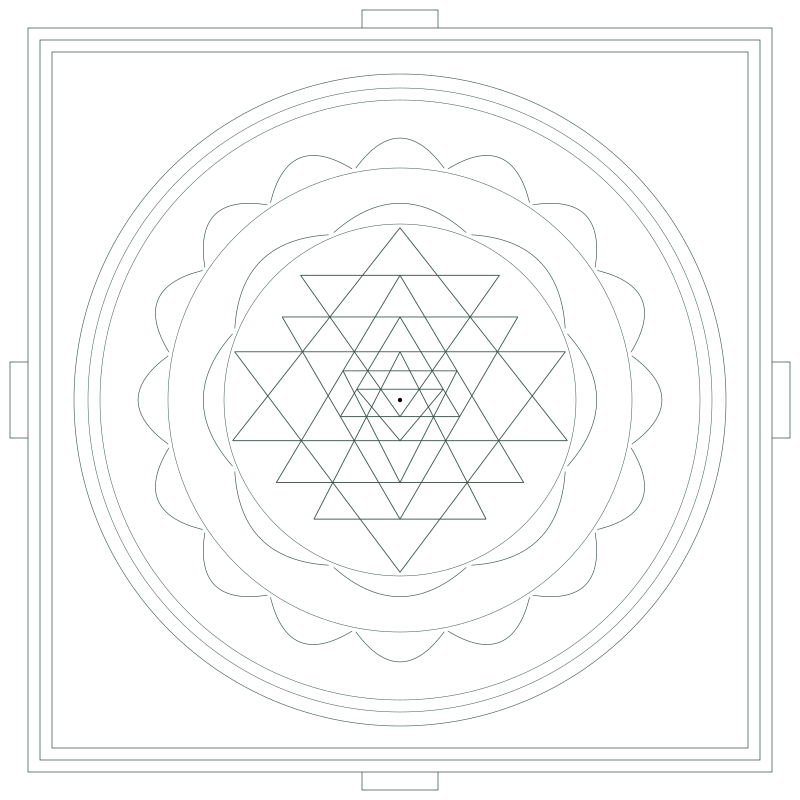

Jyotish, the science of light
Jyotish is the Sanskrit name for Vedic astrology. It is often translated as the science of light, and it is counted among the Vedanga, the limbs of the Vedas.
The craft is old. It reads the grahas, the sidereal signs, the rising sign or lagna, the Moon, the nakshatras, and the dasha periods. It is not a sun-sign column, and it is not Western tropical astrology. It is a map of one birth, used to see character, karma, and timing.
A janam kundli is a birth chart
A Vedic birth chart, or janam kundli, is calculated from date, time, and place of birth. That is the sky as it was, in the sidereal zodiac: the stars as they actually are, not the tropical zodiac tied to the seasons.
From that kundli a personal Vedic astrology reading can begin. Self opens with a first glance. Then you ask about work, love, money, family, children, home, health, study, travel, friends, and meaning.
How does Vedic astrology differ from Western astrology?
Vedic vs Western astrology is a different sky. Jyotish uses the sidereal zodiac.
Western astrology usually uses the tropical zodiac, which begins at the spring equinox. The two have drifted by more than twenty degrees, so a Vedic horoscope and a Western natal chart often disagree on the Sun sign. That is why people search why my Vedic sign is different from my Western sign. A Vedic reading also leans on the Moon, the lagna, nakshatras, and dasha timing, not only the Sun.
What is your Sun sign in each system?
These date ranges are a rough guide to the sidereal Sun, the one used in a janam kundli, beside the familiar tropical dates.
The exact day of change moves a little from year to year. A true Vedic birth chart still needs your time and place, because the lagna and the Moon matter as much as the Sun.
| Sign | Sidereal Sun, Vedic | Tropical Sun, Western |
|---|---|---|
| Aries | 14 April to 14 May | 21 March to 20 April |
| Taurus | 15 May to 14 June | 20 April to 21 May |
| Gemini | 15 June to 15 July | 21 May to 21 June |
| Cancer | 16 July to 16 August | 21 June to 22 July |
| Leo | 16 August to 16 September | 22 July to 22 August |
| Virgo | 16 September to 16 October | 22 August to 22 September |
| Libra | 16 October to 15 November | 22 September to 23 October |
| Scorpio | 15 November to 15 December | 23 October to 22 November |
| Sagittarius | 15 December to 14 January | 22 November to 22 December |
| Capricorn | 14 January to 12 February | 22 December to 20 January |
| Aquarius | 13 February to 14 March | 20 January to 19 February |
| Pisces | 14 March to 13 April | 19 February to 21 March |
Lagna, Moon, nakshatra, dasha
The rising sign, or lagna, starts the whole kundli. It moves about one degree every four minutes.
The Moon and its nakshatra, one of twenty-seven lunar mansions, describe mind and path. Dasha periods mark what is loud in a life now. Online Vedic astrology on VedicAstrology.com calculates those from your birth details. You receive answers in a familiar back-and-forth messaging form, not a generic daily horoscope.
Also asked with this
A complete answer to what Vedic astrology is also covers the sky it uses, the chart it draws, and the timing it keeps.
- What is the sidereal zodiac?
The sidereal zodiac is aligned with the stars as they are. Jyotish uses it for the signs in a janam kundli, not the seasonal tropical zodiac.
- What is ayanamsa?
Ayanamsa is the measured gap between the tropical starting point and the sidereal one. Jyotish applies it so the signs sit on the stars.
- What is a nakshatra?
A nakshatra is one of twenty-seven lunar mansions. The Moon’s nakshatra at birth describes mind and path, and usually starts the dasha clock.
- What is a dasha?
A dasha is a timing period laid over the birth chart. Vimshottari names which graha runs the years from the Moon’s nakshatra.
- Is a kundli the same as a horoscope?
People say horoscope for both. A janam kundli is one person’s sidereal sky at one minute, not a sun-sign paragraph for the day.
- Why is my Vedic sign different from my Western sign?
Sidereal and tropical starting points drifted by more than twenty degrees. The Sun did not move; the two systems place it in different rashis.