

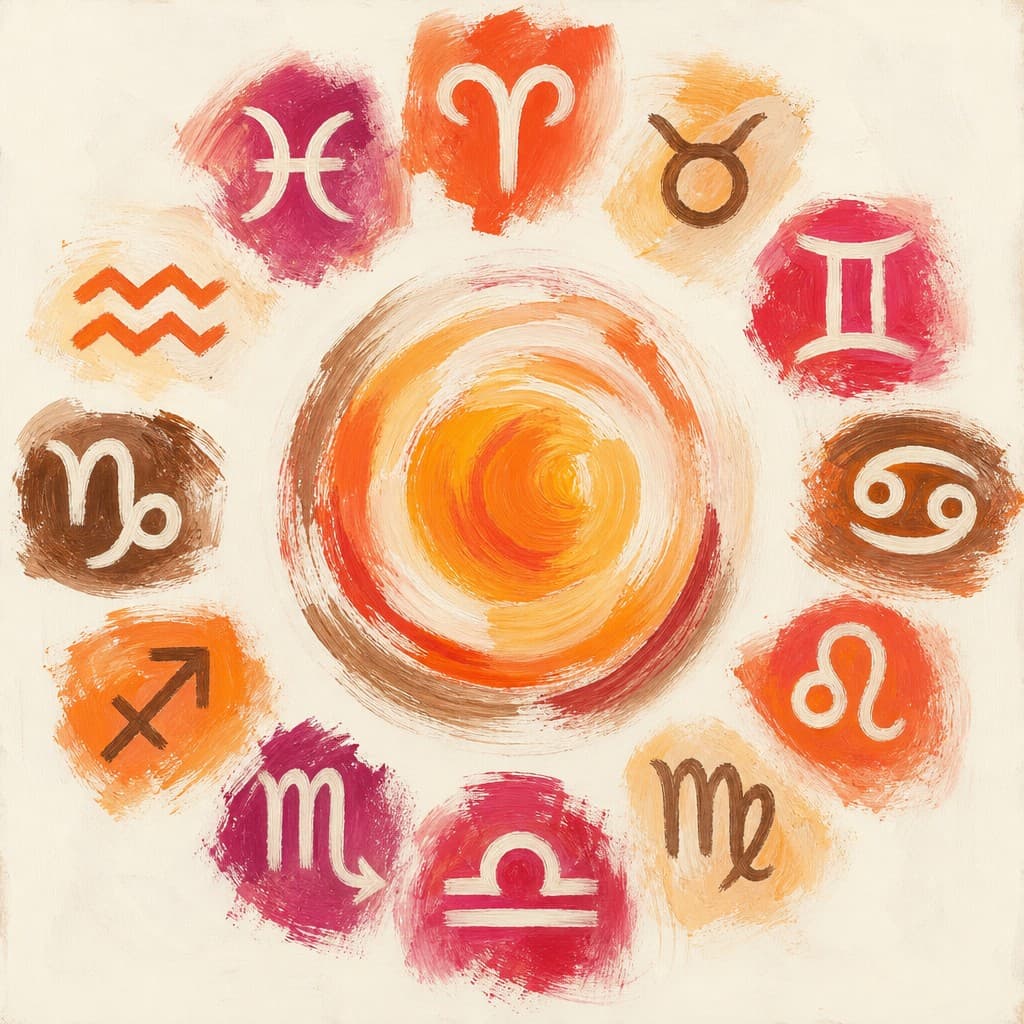

Rashis, aligned to the stars
Aries, Taurus, Gemini, Cancer, Leo, Virgo, Libra, Scorpio, Sagittarius, Capricorn, Aquarius, Pisces. In a janam kundli they are rashis, occupied by grahas, counted from the lagna.
The map underneath is the sidereal zodiac, aligned to the fixed stars rather than to the spring equinox. Fire, earth, air, and water still matter. Movable, fixed, and dual still matter. The names match the West. The dates do not. If you only know your tropical Sun sign, the Vedic rashi of the Sun may be the previous sign. Look at the whole kundli before you decide who you are.
Each sign is also three nakshatras
Jyotish divides each rashi into three nakshatras, more or less, across the twenty-seven lunar mansions. Those three do not share one planetary lord.
A Mercury in sidereal Taurus is not only earth and the bull. It is also whichever nakshatra holds it: Krittika, Rohini, or Mrigashira, each with a different pace. That is why comparing twelve Vedic signs with twelve Western signs is never the whole picture. The sidereal sign shows the broader placement. The nakshatra shows the smaller, more specific part of that same sign.
Signs from the lagna, not a costume
The Sun's rashi, the Moon's rashi, and the lagna each describe something different. The lagna organises the houses, the Moon describes mind and habit, and the Sun describes vitality, confidence, and authority.
Movable signs tend to initiate, fixed signs tend to sustain, and dual signs tend to adapt. A reading combines these qualities with houses, nakshatras, and dasha rather than reducing a person to one sign.
Why the dates keep disagreeing
The tropical zodiac is tied to the seasons, while the sidereal zodiac is aligned with the stars. Their starting points now differ by more than twenty degrees.
Jyotish applies an ayanamsa to account for that difference. VedicAstrology.com reads only the sidereal janam kundli. Bring your date, exact time, and place of birth, then ask how the rashis in that chart relate to your life.