
Your Vedic Astrology questions, answered
Jyotish, a janam kundli, Vedic vs Western astrology, birth time, nakshatra, dasha, matching, and a reading on this site. Plain answers to questions people actually bring.
Vedic and Western astrology
Vedic astrology is Jyotish, the Indian system of reading a birth chart from the sky at the moment you were born. A Vedic birth chart, also called a janam kundli, uses the sidereal zodiac: the stars as they actually are. That chart is read for the shape of a life and for timing: the rising sign or lagna, the Moon, the nakshatras, and the dasha periods. It is a personal reading of one birth, not a sun-sign column.
The exact history is unknown. Ancient Jyotisha Shastra is believed to be at least 7000 years old. It emerges from the Vedas, specifically from Jyotisha Vedanga, Vedic astronomy and astrology together. Rishis such as Vashistha, Bhrigu, and Garga practised and preserved it. It was passed down through Guru Parampara, teacher to student, for thousands of years. A janam kundli today is still that craft, read from the sky at one birth.
Jyotisha Vedanga is the limb of the Vedas that holds the sky: time, the nakshatras, and the motion of the grahas. Vedanga means a limb. Jyotish is counted among those limbs, not as a later hobby beside the scriptures. Astronomy and astrology were one study there. The janam kundli you receive now still comes from that limb.
Guru Parampara is disciplic succession: the teaching handed from guru to student, not only copied from a page. Vashistha, Bhrigu, and Garga are among the rishis named in that line. The tradition was practised and preserved that way for thousands of years. A reading still depends on that lineage of method: lagna, Moon, grahas, houses, nakshatras, and dasha, applied to one birth.
They read different skies. Jyotish uses the sidereal zodiac. Western astrology usually uses the tropical zodiac, tied to the seasons. The two have drifted by more than twenty degrees, so a Vedic horoscope and a Western natal chart often disagree on the Sun sign. A Vedic reading also leans on the Moon, the lagna, nakshatras, and dasha timing, not only the Sun. VedicAstrology.com works in this sidereal, Indian system.
Because the signs do not fall in the same place. Your Western Sun sign can stay familiar while your Vedic rashi, the sign in a janam kundli, is the one before it, or occasionally another. This is not an error. The Sun did not move. The two systems start from different points. Online Vedic astrology here reads the sidereal chart: lagna, Moon, nakshatras, and dasha, not the tropical column.
The sidereal zodiac is a division of the sky aligned with the constellations as they are. Jyotish uses it for rashis, the twelve signs in a janam kundli. It is not the tropical zodiac, which starts at the spring equinox and has drifted away from those stars. When people say Vedic astrology uses the real sky, this is what they mean.
The tropical zodiac begins at the spring equinox and follows the seasons. Most Western sun-sign horoscopes use it. Over many centuries it has moved out of line with the constellations that still give the signs their names. Jyotish does not use that seasonal frame for a janam kundli. A tropical chart can still describe a birth. It is a different map.
Ayanamsa is the measured gap between the tropical starting point and the sidereal one. Jyotish applies it so the signs sit on the stars. Different schools use slightly different values, so two Vedic programs can differ by a fraction of a degree. For most births that does not change the lagna. Near a sign change, it can. VedicAstrology.com calculates a sidereal janam kundli and reads that chart.
They are not two versions of one test. They divide the sky differently and emphasise different facts: Jyotish the Moon, lagna, nakshatras, and dasha; tropical astrology often the Sun and the seasonal signs. Accuracy here means: is this the chart of your birth in the system being used? This site reads only the Vedic chart. It does not score the two systems against each other.
You can. Many people keep a tropical Sun sign as a social name and still want a janam kundli read. Mixing both into one sentence usually confuses the houses and the timing. A reading on VedicAstrology.com stays with the sidereal chart. Bring your date, time, and place of birth, then ask about the life you are living.
Jyotish is the Sanskrit name for this craft, often translated as the science of light. It grew in India and is used across the subcontinent and the diaspora. People also call it Vedic astrology or Indian astrology. The chart is a janam kundli. You do not need to be Hindu to have the sky of your birth read.
A rashi is a sidereal sign: one of twelve equal parts of the Vedic zodiac. People often mean the Moon sign when they say my rashi, especially in India. In a full kundli every graha has a rashi, and the lagna has one too. A magazine Sun sign is usually tropical, so it may not match the rashi in your janam kundli.
Yes, the twelve names are shared: Aries through Pisces, and their Sanskrit names Mesha through Meena. The name can be the same while the slice of sky is not. That is why someone who has always said Leo can meet sidereal Cancer in a janam kundli. The reading uses the Vedic placement, then stays with your question.
It did not change in the sky. The Vedic Sun is the same star, placed in the sidereal rashi instead of the tropical one. For most of the year that rashi is the sign before the one you learned. If you were born near the change of sign, check the time and place were entered as they were. Then ask from that kundli, not from the old label.
The janam kundli
A janam kundli is a Vedic birth chart: a map of the sky at your birth, using sidereal signs, the rising sign, the Moon, and the nakshatras. Date, time, and place of birth draw it. Online Vedic astrology on VedicAstrology.com calculates that kundli, then you receive answers from it in a familiar back-and-forth messaging form. It is the same kind of chart used in Jyotish, not a Western tropical natal chart.
Yes. Kundli and kundali are two spellings for the same birth chart. Janam kundli means the chart of birth. People also say Vedic horoscope, natal kundli, or Indian birth chart. All of those, on this site, mean the sidereal map calculated from your birth details, not a daily Sun-sign column.
In ordinary speech, yes: people say horoscope when they mean a birth chart. In print, horoscope often means a sun-sign paragraph for the day. A janam kundli is not that paragraph. It is one person's sky at one minute, read for character and timing. A reading here comes from that chart, about the life you are actually living. For a fuller guide, see Find out my Vedic Astrology horoscope at /articles/vedic-horoscope.
It holds the nine grahas in sidereal signs: Sun, Moon, Mars, Mercury, Jupiter, Venus, Saturn, Rahu, and Ketu. It holds the lagna, which starts the first house. It holds the Moon's nakshatra. It holds twelve houses counted from that lagna. Vimshottari dasha is usually counted from the Moon, so the kundli is also a clock. People who only know a tropical natal chart often meet a different Sun sign here.
Both hold the same twelve houses and nine grahas. The North Indian chart is a square with a diamond, and house 1, the lagna, sits at the top. The South Indian chart is a grid of squares, and the signs stay in fixed boxes while the lagna moves. The drawing is a language. The reading is the same sky. You do not need to memorise either format before you ask.
You can print a chart that only uses the date, but the lagna will be a guess, and the houses may be wrong. Jyotish starts the whole kundli from the rising sign. If you do not know the time, wait until you do. A hospital note, a family paper, a register. A tidy invented hour still builds the wrong map.
The rashi chart is the main janam kundli: grahas in signs, houses counted from the lagna. People sometimes say rashi chart for the Moon sign alone. A lagna chart is that same kundli, emphasised from the rising sign. On this site the reading uses the full birth chart: lagna, Moon, signs, houses, nakshatras, and dasha together.
Navamsha is a divisional chart. The sky is divided more finely, and each sign is split into nine. Jyotish uses it for the inner grain of a life, and often for marriage and dharma. It does not replace the main kundli. If a reading names Navamsha, it is adding detail to the janam kundli you already have, not throwing that kundli away.
D9 is also read for the craft a graha tends to grow into: study, healing, fire-work, writing, teaching, art, a family profession, invention, or fine precision. Those are traditional associations, not a job title. The janam kundli, the tenth house, and the dasha still decide how a skill shows in public life. An exact birth time matters, because each Navamsha slice is only three degrees and twenty minutes.
Vargas are finer charts made from the same birth. Navamsha is the one people meet first. Others exist for career, children, parents, and so on. They are tools, not extra fates. A personal reading still begins with the janam kundli: lagna, Moon, grahas, houses, and the dasha that is running. You ask about the life you are in. The finer charts are used when they belong to that question.
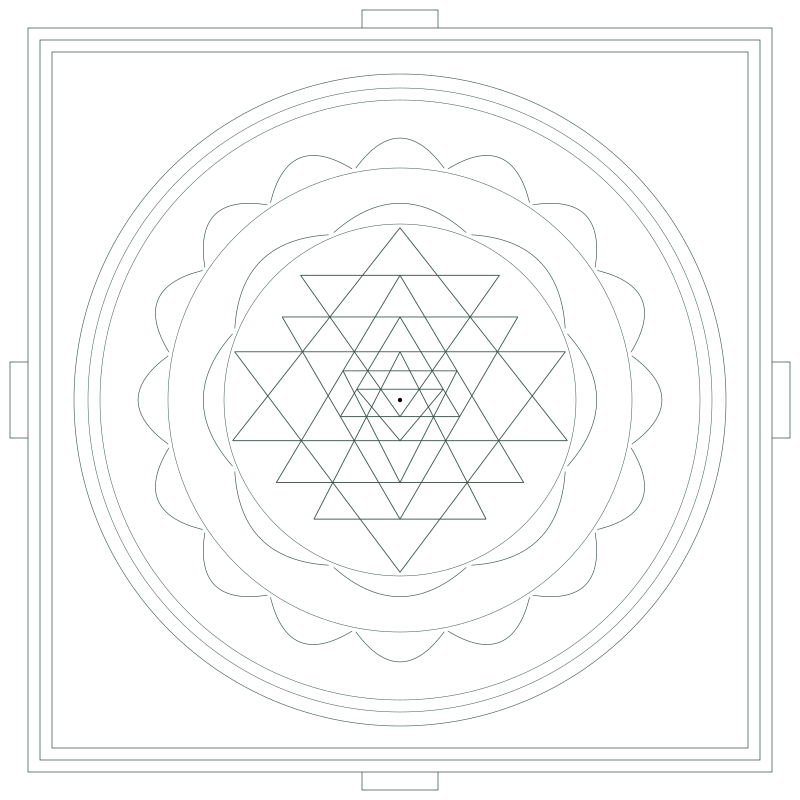
That drawing is the North Indian house map. The outer square, the inner diamond, and the two diagonals make twelve houses. House 1, the lagna, is the top diamond. The numbers then run anti-clockwise. It is a way to see the chart at a glance. The meaning lives in which graha sits in which house from your rising sign, not in the ornament of the lines.
A picture of the chart is only the map. A reading explains what that map shows for the question you asked. A free kundli that stops at the drawing has not read anything yet. On VedicAstrology.com the first janam kundli opens a first glance of your choice, written from that chart. Then you ask the questions that are relevant to you; if you want to go much deeper, you can opt to join as a paid member where you are free to ask as many questions as you like (reasonable usage applies). You are also free to cancel when you like and still use the remaining time you have already paid for.
Birth time, place, and the rising sign
The rising sign, or lagna, moves about one degree every four minutes, so a sign is up for about two hours. That rising sign starts the whole Vedic kundli. Twenty minutes off is usually still the same rising sign. If the birth falls near the change from one sign to the next, even a few minutes can be the wrong Vedic chart. Date, time, and place of birth are what make a janam kundli.
Please do not guess. A guessed time can look precise and still be the wrong kundli. If you have no record, wait until you do. A hospital note, a family paper, a register. That is kinder than inventing a clock. Without a real time, the lagna and the houses are not trustworthy, and dasha detail can slip too.
Usually yes, if it is the time written at birth, not a round hour remembered later. Clocks in labour wards are not astronomical instruments, so a few minutes of ordinary error is common. Twenty minutes off is usually still the same lagna. Near a change of sign, those few minutes matter. Use the recorded time. Do not tidy it.
Both. The lagna depends on where you were born as well as when. The same minute in two cities is not the same rising sign. Longitude changes the local sky. Enter the place as it was then, not the city you live in now. Timezone history, including whether daylight saving was in force that day, belongs with that place.
The place of birth, as it was at that time. Not the country on your passport now, and not where you grew up if that was later. A janam kundli is the sky over that town or city at that minute. If the name of the place has changed, use the location, not the new label.
The lagna is the sign that was coming up on the eastern horizon at your birth. In a janam kundli it is the first house. The other eleven houses are counted from it. Body, wealth, siblings, home, children, health, partnership, change, dharma, career, gains, and loss all take their place from that rising sign. If the lagna is wrong, every house is counted from the wrong sign.
Twenty minutes off is usually still the same rising sign. The reading of the houses will usually hold. If the birth sits near the change from one sign to the next, twenty minutes can flip the lagna, and then the whole kundli is counted from the wrong start. If you later find a better time, the chart can be calculated again.
Birth-time rectification is a specialised craft: testing a clock against known events. This site calculates the kundli from the time you give. It does not invent a time to make a story fit. If the time is uncertain, wait until you have a record. Then ask from that chart.
That is twelve hours wrong. The lagna will almost always be a different sign, and the houses will not be yours. Check the record. Night births are where this mistake is common. A janam kundli needs the clock as it was, including morning or evening.
The clock on the wall is not the sky. Jyotish converts that civil time to the sky overhead. If the country was on daylight saving, or the zone changed in that decade, the conversion changes. Enter the place of birth. The calculation uses the timezone history for that place on that date. You should not try to correct it by hand unless you know the history well.
Moon, nakshatras, and signs
A nakshatra is a lunar mansion in Jyotish, one of twenty-seven parts of the sidereal sky. Your Moon nakshatra is the mansion the Moon occupied at the moment you were born. It is a core piece of a Vedic birth chart, along with the lagna. It is also the usual starting point for dasha timing. Online Vedic astrology here calculates it from your date, time, and place of birth.
Janma nakshatra is the Moon's nakshatra at birth. People also say birth star. It is not a lucky star you pick from a list. The Moon moves about thirteen degrees a day, so the nakshatra usually changes within a day. Two people with the same Moon sign can have different birth stars, and therefore different dasha periods.
The Moon is as central as the Sun, and often more so for how a life feels from the inside. The Moon describes mind, habit, mother, sleep, and ordinary days. The Sun describes soul, father, vitality, and the wish to be seen. A Vedic reading begins with the Moon and the lagna together, not with a sun-sign badge.
Yes. The same Moon sign can hold three nakshatras. The house from the lagna can differ. The dasha running now can differ. That is a common reason two people with the same tropical Cancer label, or even the same Vedic Moon sign, do not live alike. The janam kundli is larger than one rashi.
No. An online list of lucky nakshatras cannot tell you yours. Your janma nakshatra is calculated from date, time, and place of birth, in the sidereal zodiac. If you only know a tropical Moon, the nakshatra may differ, for the same reason the Vedic Sun often differs.
The Sun sign is where the Sun sat. The Moon sign is where the Moon sat. In Western popular astrology the Sun became the public name. In Jyotish the Moon sign and the Moon nakshatra describe the inner weather of a life, and they start the usual dasha clock. Both grahas are in your kundli. Neither is the whole map.
Because the Moon moves quickly, so it is a precise fact of the birth. Because it describes the mind you live with. Because Vimshottari dasha is usually counted from the Moon's nakshatra. A sun-sign column can skip all of that. A janam kundli cannot.
Lunar mansion is the English name for nakshatra. The Moon walks through twenty-seven of them in a little under a month. Each mansion is a named part of the sidereal sky. Your birth star is the mansion the Moon was in when you were born, with its pada if the time is known.
They share names and a family resemblance: Aries still leans toward heat and start, Capricorn toward work and time. They do not share the same slice of sky, so a planet in tropical Gemini may sit in sidereal Taurus. Jyotish also reads that planet through nakshatra, house from the lagna, and dasha. The sign is one layer, not the whole sentence.
The nine grahas
A graha is a seizing body in Jyotish: a planet, or the Moon, or the lunar nodes, used as a point of meaning in the kundli. There are nine: Sun, Moon, Mars, Mercury, Jupiter, Venus, Saturn, Rahu, and Ketu. Each has a character, a house it occupies, signs it rules, and periods when its dasha is loud. A reading names the graha that belongs to your question.
Jyotish counts Sun and Moon as grahas, then Mars, Mercury, Jupiter, Venus, Saturn, plus Rahu and Ketu, the lunar nodes. That is nine. Uranus, Neptune, and Pluto are not used as these nine. Rahu and Ketu are not planets in the modern astronomical sense. They are the points where the Moon's path crosses the Sun's path, and Jyotish reads them as strongly as the rest.
The Sun describes soul, father, vitality, authority, and the wish to be seen. It is one graha among nine, in a sidereal sign, in a house from the lagna. A Vedic reading that stopped at the Sun would be treating Jyotish like a sun-sign column. The Sun is part of the answer. It is not the whole answer.
Mars is heat, courage, conflict, drive, and the will to act. It is also the graha behind Mangal dosha when it sits in certain houses. Mars is not only aggression. In a well-placed house it can be stamina and clean effort. In a difficult house it can be haste or argument. The kundli, the dasha, and your question decide which of those is speaking.
Mercury is speech, thought, trade, writing, and the way a mind connects. A strong Mercury can make learning and conversation easy. A pressured Mercury can scatter attention or make words sharp. Retrograde Mercury in Jyotish is a natal or transit condition to read with sign, house, and dasha. It is not a week in which everyone has licence to blame the post.
Jupiter is growth, teaching, faith, children, and the wish to make meaning. People treat a Jupiter dasha as a prize. It is not automatic luck. A well-placed Jupiter can open study, guidance, and generosity. A troubled Jupiter can inflate a hope that does not land. Results still depend on the house, the lagna, and the period running now.
Venus is relationship, pleasure, art, comfort, and the way you join with what you love. It is not only romance. Money, taste, and the body that wants ease are Venusian too. In matching, Venus still sits inside two whole kundlis. A reading about love will look at Venus, the seventh house, the Moon, and the dasha, not at Venus alone.
Saturn is time, work, delay, limit, and the long lesson. People fear it. Jyotish treats it as a graha that matures a life, not as a curse with one meaning. A well-placed Saturn can deliver through labour. A hard Saturn can feel like a closed door. Sade Sati is Saturn moving relative to the natal Moon. It is a transit, not a verdict on your worth.
Rahu and Ketu are the lunar nodes, the two points where the Moon's path crosses the ecliptic. They are always opposite each other. Rahu describes hunger, stretch, foreignness, and obsession. Ketu describes release, past skill, detachment, and the place you cannot quite hold. Together they are a hinge in the kundli. A reading names them when they belong to your question.
Benefic and malefic are old labels: Jupiter and Venus as gentle, Saturn and Mars as harsh, Mercury mixed, the Moon depending on its company, Rahu and Ketu often sharp. The labels are a starting point, not a moral score. A functional malefic for your lagna can still protect a house. A functional benefic can overdo a theme. The chart is read as a whole.
A retrograde graha appears to move backwards from Earth. In a janam kundli it is a natal fact: that graha's way of working may turn inward, review, or take a second path. In transit it is a shorter weather. Neither is a curse. Mercury retrograde in the newspapers is not the same as a retrograde graha in your own chart. The reading will name it when it belongs.
Chara karakas are movable significators in Jaimini Jyotish. They are ranked by how far each graha has travelled in its sign, from 0 to 30 degrees. The highest is Atma Karaka, the self. Then come career, siblings, mother, and, if eight are used, father, then children, rivals, and spouse as the lowest. Ketu is never a chara karaka. The houses still matter. This list is a second language over the same janam kundli.
Atma Karaka is the graha with the highest degree in its sign. It is the significator of the self and of the soul's work in this life. A reading that names the AK is naming which planet is doing that job, not replacing lagna, Moon, or dasha. If another graha sits almost as high, the AK can be replaced. That is uncommon, and it is the heaviest handover in this scheme.
When two grahas are very close in degree, often sharing the same integer degree, they compete for one seat. The one with more minutes holds the karaka. The other can replace it, especially in its own dasha. Life then changes in that karaka's area: work, a parent, a child, a partner, or the self if the Atma Karaka is the one being replaced. A retrograde graha makes replacement more likely, because its degree is falling.
Seven chara karakas use Sun through Saturn and leave Rahu out. There is no separate Pitru Karaka. Eight include Rahu and add Pitru Karaka, father. Ketu is never used. The eight-fold list is common for worldly life. The seven-fold list is the shorter classical scheme, sometimes kept for path and release. A reading should say which list it is using.
Exaltation is a sign where a graha is treated as especially able. Debilitation is a sign where it is treated as strained. These are dignities, not grades on a report. A debilitated graha can still do useful work through house, aspects, and dasha. An exalted graha can overdo its theme. Ask about the life you are living. The dignity is one fact among others.
Classical Jyotish uses the nine grahas. Uranus, Neptune, and Pluto are not among them. Some modern readers add them. A janam kundli on VedicAstrology.com is the sidereal chart of lagna, Moon, the seven visible grahas, and the nodes. The reading stays with that map.
The twelve houses
The houses, or bhavas, are twelve parts of life counted from the lagna. In short: body and self; wealth; siblings and effort; home and mother; children and intelligence; health and service; partnership; death, debt, and change; dharma and fortune; career; gains; and loss or release. A graha speaks through the house it occupies and the houses it rules.
From the lagna. House 1 is the rising sign. House 2 is the next sign, and so on around the kundli. This is why a wrong birth time ruins the houses. Whole-sign houses are common in Vedic practice: the whole rashi of the lagna is the first house. The reading uses that janam kundli, not a tropical house system from another software unless that is the chart being read.
The first house is the lagna itself: body, manner, health of the frame, and the way you meet other people. Grahas here colour the person as they walk into a room. The lord of the first house, wherever it sits, shows where that life is trying to go. Self, the first glance on this site, is written with this house in view, together with the Moon and the dasha.
The seventh is partnership: marriage, a long bond, and sometimes the open other in business. It is not only a wedding date. Venus, the seventh lord, grahas in the seventh, and the dasha running now all belong to questions about love and matching. Two charts, read together, still need each person's seventh, not only a guna score.
The tenth is career, status, and the work that can be seen. It is not a job title by itself. The tenth lord, grahas in the tenth, Saturn, the Sun, and the dasha together describe how work wants to go. A reading about work stays with this house and with the period you are in, not with a generic lucky career list.
The fifth is children, intelligence, romance in the heart, and the intelligence that creates. People ask it for pregnancy, study, and the love that is not yet a seventh-house bond. No house guarantees a child. The fifth describes a theme. The rest of the kundli and the period you are in still matter.
They are the dusthana houses: illness and conflict; death, debt, and hidden change; loss, exile, and letting go. Fear makes them larger than they are. Every chart has them. Grahas there can still serve a life. A reading names them when your question touches that ground. It does not treat them as a curse.
Kendras are houses 1, 4, 7, and 10: the pillars of the chart. Trikonas, also called konas, are 1, 5, and 9: the dharma houses. Grahas in these houses are often louder. House 1 belongs to both groups. These are teaching words. You do not need them to ask about work or love. The reading will use the houses that belong to the question.
Upachaya houses are 3, 6, 10, and 11. They tend to grow with effort. What is awkward early can become useful later. They are sometimes called the houses of free will, because they describe karma being made in this life. Houses 3, 6, and 11 are the sharper subset, called trishadaaya. House 6 is also a dusthana, so it can both wound and strengthen.
Not always. Jyotish commonly uses whole signs from the lagna. Many Western charts use placidus or other quadrant systems, where a house can start mid-sign. That alone can move planets into different houses. When a Vedic reading and a Western reading disagree on a house, check the system before you assume the sky disagrees.
Dasha, timing, and transits
A dasha is a timing period. The janam kundli is the sky at birth, fixed. Dasha is a clock laid over that sky. Vimshottari is the system used most often: a hundred and twenty years of planetary periods, counted from the Moon's nakshatra. Each mahadasha is a long chapter named for a graha. Inside it run antardashas, shorter chapters. The question is not only what your tenth house means. It is which graha is speaking now.
Mahadasha is the long period, years at a time. Antardasha is a period inside it, often months to a few years. People feel a change when either turns. Saturn-Moon is not Saturn-Mars. When someone asks when will my luck change, they are often asking when a dasha or antardasha turns. The reading can name the period. It cannot promise a date on which a job or a marriage must arrive.
Vimshottari is the usual dasha system in a janam kundli. It runs Sun, Moon, Mars, Rahu, Jupiter, Saturn, Mercury, Ketu, Venus, in that order, with fixed lengths that add up to a hundred and twenty years. It starts from the Moon's nakshatra at birth, part-way through the first mahadasha. VedicAstrology.com calculates this from your birth details, then you ask what the current period means.
Sun six years, Moon ten, Mars seven, Rahu eighteen, Jupiter sixteen, Saturn nineteen, Mercury seventeen, Ketu seven, Venus twenty. You are not waiting for a full hundred and twenty years to live. You are in one of these chapters now, and a smaller antardasha colours it. The lengths are the same for everyone. The meaning is not, because each graha sits differently in each kundli.
A chart may contain a strong Jupiter in the ninth while a Saturn mahadasha makes work, limits, and patience more immediate. A difficult Mars may be quieter during a Venus period. The kundli did not change. The clock did. People often come to a Vedic reading when a dasha has turned, because the way they used to live no longer fits.
No. A Saturn dasha is not a curse. A Jupiter dasha is not a prize. Results depend on where that graha sits, what it rules from your lagna, and the house it occupies. A well-placed Saturn can deliver through labour. A troubled Jupiter can inflate a hope that does not land. Mahadasha is not a verdict.
Sade Sati is Saturn transiting the twelfth, first, and second houses from the natal Moon, a span of about seven and a half years. People search it when life feels heavy. It is a gochara, a transit, over the Moon, not a moral judgement. Some lives feel the middle two and a half years more. A reading looks at your Moon, Saturn, and the dasha together, rather than treating Sade Sati as a single fate.
A transit is where a graha is in the sky now, relative to your natal kundli. Dasha says which natal graha is running the years. Gochara says what is moving over that map this month or this year. Both matter. Dasha usually gives the broader chapter. Transits colour the weeks. Saturn and Jupiter transits are the ones people feel most clearly.
It can name a period when a theme is more likely to come forward. It cannot honestly guarantee a day on which money, a child, or a meeting must arrive. Anyone who sells a single date as a certainty is not reading a kundli. You still live the years. The chart is guidance about this period of your life.
A Saturn return is a Western transit idea: Saturn coming back to its natal place, around age twenty-nine and again later. Sade Sati and Saturn dasha are Jyotish clocks, one from the Moon, one from the natal Saturn's period. They can overlap in calendar time and still not be the same fact. A reading here uses dasha and Vedic transits from the janam kundli.
In Jyotish that question usually means: when does the dasha or antardasha turn, and what does that graha rule in my chart? Luck is not a separate planet. It is a way of speaking about a period that opens or closes. The reading can name the period you are in and the one that follows. It cannot hand you a lottery date.
Yes. The nodes take about eighteen years to go around, and they stay in a sign for about a year and a half. When they cross a natal graha or a house that rules your question, that house can feel unsettled or stretched. They still sit inside dasha. A Rahu transit in a quiet dasha is not the same as a Rahu mahadasha.
Matching, family, and two charts
Yes. After your own janam kundli, you can add another person's Vedic birth chart and open a compatibility reading. Two kundlis, read together. That is Vedic kundli matching in a familiar messaging format, from the sidereal charts, not from two sun signs.
Gun milan is a traditional score from the two Moon nakshatras, often out of thirty-six points. Gana, yoni, nadi, and the rest of the ashtakoot list come from those mansions, not from the Sun sign. It is a screen, not a marriage. A low score does not forbid a life together. A high score does not guarantee one. Two full kundlis still need to be read.
Mangal dosha is Mars in certain houses, usually 1, 2, 4, 7, 8, or 12, with school-to-school variation. Families sometimes treat it as a bar to marriage. Jyotish is more careful. Mars in those houses can mean heat in partnership or family. It can also be cancelled or matched by the other chart. A reading looks at both kundlis. It does not end at a yes or no label.
That is an old matching rule of thumb, not a law of the sky. Two charts can share heat and still make a life, or not, for many other reasons: dasha, the Moon, the seventh lords, families, and choice. If Mangal dosha is the question you were given, bring both birth details and ask. Do not stop at a forum label.
Nadi is one of the ashtakoot tests, from the two Moon nakshatras. Same nadi is treated as a difficulty, especially in talk about children. Like all guna points, it is one test. It is not the whole of kundli matching and not a medical fact. A reading of two janam kundlis can include it without letting it swallow the rest of the charts.
Yes, if you want both lagnas. Matching that uses only Moon nakshatras can run on date and a rough time, but it is thinner. A compatibility reading on this site is two kundlis together. Each needs date, time, and place as they were. If one time is unknown, wait. Do not invent it to force a score.
Marriage is the usual reason families ask. Two charts can also be read for a partnership, a parent and child, or a shared home. The seventh house is not the only house that binds people. The Moon, Venus, and the dashas running now still matter. Ask the question you actually have, not only the word matching.
No. Thirty-six points are a traditional filter, not a command. People with modest scores have made good lives. People with high scores have not. The score does not know the families, the timing, or the will of either person. A kundli can show how two maps sit together. It cannot make the decision.
You can add another person's Vedic birth chart if you are allowed to add them. If they are under 18, only do so if you hold parental responsibility. A child's lagna still needs a real birth time. A reading of a young life stays with what can be said at that age. It is not a script they must live.
Kaal Sarp is a name for all the grahas sitting between Rahu and Ketu. The internet makes it sound like a single doom. Charts with this pattern are common enough, and lives with it are not one story. If it is in your kundli, it is a fact of the nodes and the rest of the map. It is not a reason to be afraid of your own birth.
Questions people bring from a life
The fifth house, Jupiter, and the dashas can describe whether children are a loud theme, and when that theme is more active. No ethical reading turns that into a medical promise or a date of birth. If you are asking about a pregnancy or fertility, the chart is not a substitute for a medical professional.
Yes. The ninth and twelfth houses, the fourth, Rahu, and the dasha often belong to questions about foreign places and leaving home. A reading can show whether this period favours stretch or roots. It cannot pack the boxes. Bring the birth as it was, then ask about the move you are actually considering.
Jyotish is a reading of a birth chart and of timing. It is not a carnival guess. It also cannot live your years for you. A kundli shows which themes are strong and which period you are in. The decisions stay with you. On this site the answers come from your janam kundli, in a familiar messaging form, about the life you are living.
A reading here does not name a date of death. Classical texts discuss longevity as a technical subject. This site does not. You can ask about health, meaning, and this period of your life. You will not be given an ending date.
No. The chart shows karma already in motion: conditions, tendencies, and the periods when those tendencies get loud. It does not take your choices away. Fear of the grahas can make a person wait on the sky as if the map were the owner. Jyotish is read so you can see the pattern. The living of it stays with you. It will not tell you that you deserved a loss, and it will not bless a choice you have already made.
Karma here is not a punishment and not a moral verdict. It describes the circumstances you were born into and the tendencies that tend to repeat: family, body, work, relationships, and the years when those themes change. Dasha shows when a tendency is more likely to come forward. You remain the one who lives through the period.
Yes. The threads on VedicAstrology.com stay with one part of life so the answer does not wander: work, love, money, family, children, home, health, study, travel, friends, meaning. Ask the question that is actually in the room. The reply stays with this chart and this period.
Using VedicAstrology.com
It depends what you mean by online. A Zoom hour with a named Jyotishi is one craft. A per-minute marketplace is another. A sidereal janam kundli in messaging form is a third. VedicAstrology.com is the third: your chart is calculated from date, time, and place of birth, then you ask in a familiar messaging format. Book a traditional consultant when you want a live lineage session. Avoid marketplaces when you want real Jyotish. See the full comparison on where to get an online Vedic astrology reading.
The important test is whether a real sidereal janam kundli is calculated before the answer is written. A chatbot with no chart can sound fluent and still be wrong. Feature-heavy AI Kundli apps can help you inspect placements when they show the numbers they used. VedicAstrology.com calculates the kundli from date, time, and place of birth, then you receive answers in a familiar messaging form about the life you are living. Favour systems that expose lagna, Moon, nakshatra, and dasha rather than a mysterious prediction. See the full comparison on AI Vedic astrology readings.
Yes. VedicAstrology.com is an online Vedic astrology reading in a familiar messaging format where you can ask any questions that come to you in that moment. You enter your birth details, we calculate the Jyotish chart, and you ask about work, love, money, family, children, home, health, study, travel, friends, and more. You can also choose to pay to add another person's chart for a Vedic compatibility reading and ask unlimited questions (reasonable usage). You are free to cancel when you like and still use the remaining time you have already paid for.
Yes. Your first janam kundli opens a free Vedic astrology reading on VedicAstrology.com. Your current period is already waiting, written from your chart, about the season you are in now. If you want more charts, a comparison, or to go further, you can continue from there if you opt for a paid consultation. Payment is made by the month or by the year in your own currency and you will get to ask unlimited questions (reasonable usage) and you can cancel when you like and still use the remaining time you have already paid for.
Yes. When you continue, you leave this site and pay on Stripe's own page. Stripe is the second-largest online payment processor in the world. Payments are 100% secure and VedicAstrology.com never sees your full card number. A month or a year is billed in your local currency. You can cancel when you like and still use the time you have already paid for.
You can begin a Vedic birth chart reading on this device without signing in. Sign in if you want the kundli and your reading to come back on another phone or computer.
In a familiar back-and-forth messaging form, you receive answers to your questions, read directly from your personal chart. The Jyotish birth chart is calculated from your date, time, and place of birth. Ask any questions that come to you in that moment. It is not a live call with a marketplace astrologer, and it is not a generic daily horoscope.
You give the date, time, and place of birth. A janam kundli is calculated in the sidereal zodiac. You land in a familiar messaging format. Your current period is already waiting. Then you ask. Each thread stays with one part of life, so the Jyotish answer does not wander. The replies are read from your chart.
Ask any questions that come to you in that moment, about the life you are actually living. Work, love, money, family, children, home, health, study, travel, friends, meaning. Keep one part of life in one thread so the answer can stay with it. The first glance, Your current period, does not need a question. It is already written from the chart.
No. This site reads the janam kundli and answers from that chart. It does not sell gemstones, metals, or ritual packages, and it does not prescribe them as a remedy shop. If you want a gem or a rite, that is a different craft, and it needs a practitioner you trust. The reading here stays with the map and the question.
No. It is guidance from a Jyotish chart. It is not a substitute for a qualified professional. Birth details stay on this device. If you sign in, they are also stored with your account, and are sent to the calculation and language providers that produce the reading.
The account holder must be 18 or over. You may add another person's chart only if you are allowed to add them. If they are under 18, only do so if you hold parental responsibility. Their date, time, and place of birth still need to be real. A guessed time is still the wrong kundli.
No. VedicAstrology.com does not sell your details and does not use them for ads. Charts and readings are kept so they can come back if you sign in. You can download your data or delete the account from the menu. The privacy page sets this out in full.
Correct it when you learn the real time. Saving calculates the chart again. The rising sign moves about one degree every four minutes. Twenty minutes off is usually still the same rising sign. Near a change of sign, a few minutes can flip the kundli. For days and weeks, the time needs to be close.
Yes. If you choose to pay for a membership, you can add another person's Vedic birth chart and open a compatibility reading. Two kundlis are read together. The first janam kundli is free. Begin with your own date, time, and place of birth. To go deeper, you can choose to opt for a paid membership with unlimited questions whenever you like (within reasonable usage).