

Vedic astrology articles
Articles on Jyotish: why it is called Vedic astrology and not Hindu astrology, what a kundli is, nakshatra, dasha, kundli matching, Mangal dosha, career, Venus, Navamsha, Kaal Sarp, karma, lagna, Moon, houses, grahas, Ayurveda and Vedic astrology, and how Vedic astrology differs from Western astrology. Answers read from a janam kundli, in a familiar messaging form.


 Find out my Vedic Astrology horoscopeA Vedic horoscope here means your janam kundli: the sidereal sky at your birth, read for your life. It is not a sun-sign column for the day. Bring date, time, and place of birth to open it.
 Ayurveda and Vedic astrology: the difference, and the connectionAyurveda and Vedic astrology both come from the wider Vedic knowledge tradition. They are related. They are not the same craft. One works with the body. The other reads the sky at birth.
- What is a Vedic birth chart, or janam kundli?A janam kundli is the Jyotish map of the sky at your birth. Date, time, and place draw it. Lagna, Moon, grahas, houses, and dasha are read from that one chart, not from a sun sign.
 Nakshatras, the birth star in Vedic astrologyYour nakshatra is the lunar mansion the Moon occupied at birth. Vedic astrology uses twenty-seven of them. The birth star describes mind and path, and it is usually where dasha timing begins.
 Dasha periods in Vedic astrologyA dasha is a planetary period used to time developments shown in the birth chart. Vimshottari dasha assigns long mahadashas and shorter antardashas to the nine grahas. The active periods show which parts of the janam kundli are most relevant now.
 Kundli matching in Vedic astrologyKundli matching, or kundli milan, compares two sidereal birth charts. Gun milan scores compatibility from the two Moon nakshatras, but a full reading also checks the seventh houses, their lords, Venus, Jupiter, Mars, Navamsha, and dasha timing.
 Mangal dosha, or being Manglik, in Vedic astrologyMangal dosha, also called Kuja dosha or Manglik status, refers to Mars in certain houses of a birth chart. It is commonly considered in marriage matching, but it must be read with cancellation conditions and the rest of both charts.
 Career and vocation in the Vedic birth chartCareer in Jyotish is read mainly from the tenth house, its lord, related grahas, and the dasha now running. The second, sixth, and eleventh houses add information about income, service, competition, and gains.
 Venus, love, and beauty in Vedic astrologyVenus, or Shukra, describes partnership, pleasure, beauty, art, comfort, vehicles, and the ability to relate to other people. Its results depend on its sign, house, rulership, aspects, conjunctions, and dasha.
 Navamsha, the D9 chart in Vedic astrologyNavamsha, or the D9 chart, is a divisional chart made by dividing each sign into nine equal parts. Jyotish uses it for marriage and dharma, and to assess how the strength and promise of a natal graha develop over time.
- Skills and abilities in the Navamsha chartNavamsha, the D9 chart, is often used for marriage. Jyotish also reads it for inner skill: the craft a graha tends to grow into over time, not a job title stamped at birth.
 Kaal Sarp dosha in Vedic astrologyKaal Sarp, or Kala Sarpa, describes a chart in which the seven visible grahas fall between Rahu and Ketu on one side of the nodal axis. Its importance is debated in Jyotish, so it should not be treated as a complete judgement on a life.
 How sidereal and tropical astrology can both be trueVedic and Western astrology measure the zodiac from different starting points. A sidereal janam kundli and a tropical natal chart can therefore describe the same birth with different signs. This site uses only the sidereal janam kundli for readings.
- Kendra, kona, and the other house groupsA janam kundli has twelve houses, counted from the lagna. Jyotish also reads them in groups. Kendras, konas, dushthanas, and upachayas describe how a house behaves, not only what it rules.
 How old is Vedic astrology, really?The exact history is unknown. Ancient Jyotisha Shastra is believed to be at least 7000 years old. It comes from the Vedas, from Jyotisha Vedanga, and was kept by rishis and passed down through Guru Parampara.
- Why Vedic Astrology and not Hindu Astrology?After Chakrapani Ullal came to the United States in 1979 at the behest of his guru, Swami Muktananda, his professional life changed. Soon after arriving in California, he prepared a brochure called Vedic Astrology. Until then, he said, that name had never been used. In India, and in the West, the craft was called Hindu astrology.
 Chara karaka replacement in Vedic astrologyChara karakas are the movable significators in Jaimini Jyotish, ranked by how far each graha has travelled in its sign. When two sit close in degree, one can replace the other. That replacement can change how a part of life is lived.
 Free will and choice in Vedic astrologyA janam kundli shows the karma a life begins with. It is not a sentence. Jyotish is read so you can see the pattern. The chart does not own the person who was born under it.
- Karma and free will in the Vedic birth chartIn Jyotish, karma means the conditions and tendencies a life begins with, and the periods when those tendencies become more active. A janam kundli describes that pattern. It does not take your choices away.
 The rising sign, or lagna, in Vedic astrologyThe lagna is the sign that was coming up at your birth. In a janam kundli it starts the whole chart. That is why Vedic astrology needs the time of birth.
 The Moon, mind, and nakshatra in Vedic astrologyIn Jyotish the Moon is as central as the Sun. The rashi of the Moon, and the nakshatra it occupies, describe mind, habit, and how a life feels from the inside.
 The Sun, soul, and vitality in Vedic astrologyThe Sun in a janam kundli describes soul, father, vitality, and confidence. It is one graha among nine. Jyotish does not use the Sun as a substitute for the whole chart.
 Saturn, time, and the long lesson in Vedic astrologySaturn, or Shani, is time, work, delay, and the long lesson. People fear it. Jyotish treats it as a graha that matures a life, not as a curse with a single meaning.
 What is Sade Sati in Vedic astrology?Sade Sati is the period when Saturn moves through the sidereal sign before your natal Moon, the Moon's own sign, and the sign after it. The full transit lasts about seven and a half years. Its effects depend on your birth chart and current dasha.
- Houses in a Vedic birth chartA janam kundli has twelve houses, counted from the lagna. Each house is a part of life: body, wealth, siblings, home, children, health, partnership, death and transformation, dharma, career, gains, and loss.
- The nine grahas in Vedic astrologyJyotish reads nine grahas: Sun, Moon, Mars, Mercury, Jupiter, Venus, Saturn, Rahu, and Ketu. Some are planets, the Sun and Moon are luminaries, and Rahu and Ketu are lunar nodes. In a birth chart, each graha describes a distinct set of qualities and life topics.
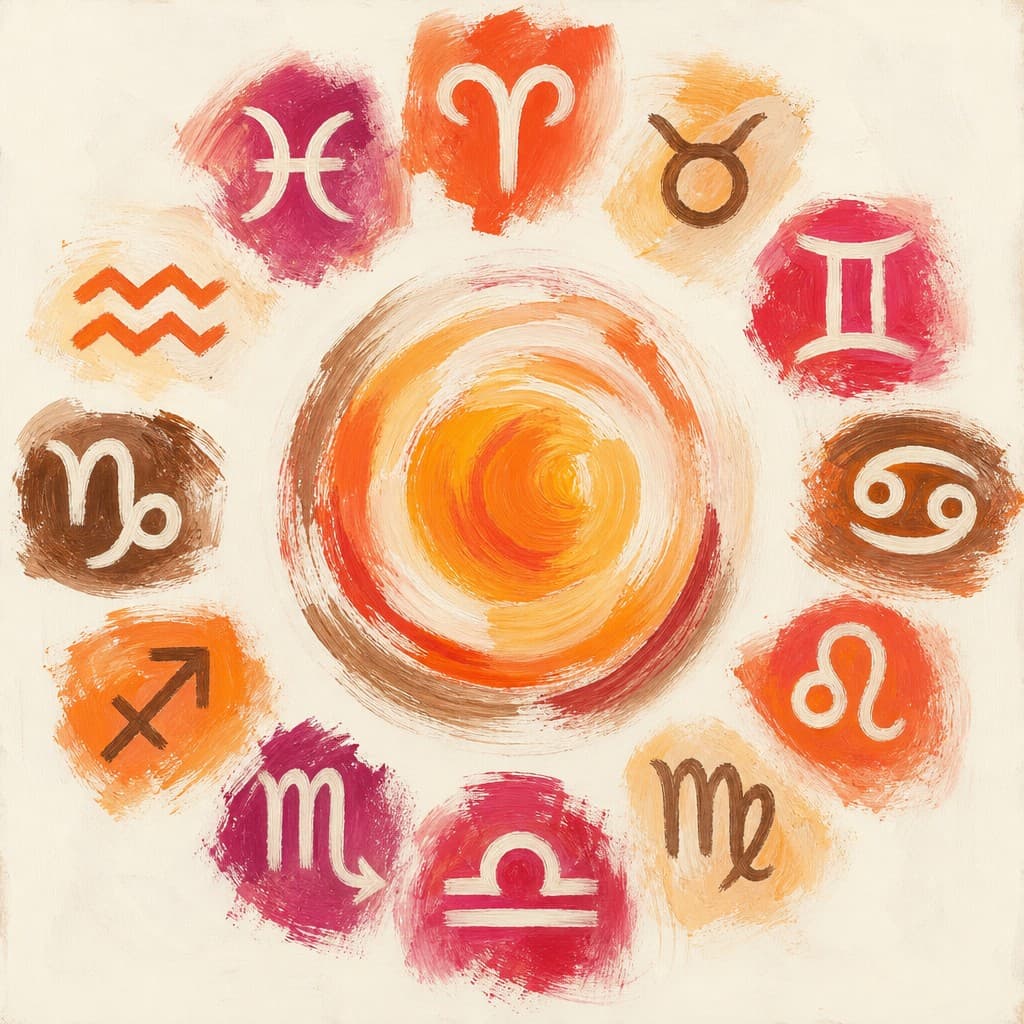 Sidereal signs in Vedic astrologyThe twelve signs in Jyotish are called rashis and are measured in the sidereal zodiac. They use the familiar names Aries through Pisces, but their dates differ from tropical Western astrology. This is why a Vedic Sun, Moon, or rising sign may be different.
- How Vedic astrology differs from Western astrologyMany people in the West first meet astrology through a tropical Sun sign. Jyotish uses a sidereal zodiac and gives central roles to the lagna, Moon, nakshatras, and dasha timing. The two systems share some terms, but they calculate and interpret a birth differently.
 Gochara, or transits, in Vedic astrologyGochara means the current movement of the grahas through the zodiac in relation to your janam kundli. Saturn crossing the natal Moon is a well-known example. Jyotish reads transits together with dasha because they describe different kinds of timing.
 Mars, courage, and conflict in Vedic astrologyMars, or Mangala, describes energy, courage, conflict, younger siblings, land, and the will to act. Its results depend on its sign, house, aspects, conjunctions, and dasha.
 Mercury, speech, and learning in Vedic astrologyMercury, or Budha, describes speech, learning, trade, calculation, writing, and the ability to connect ideas. It is strongly influenced by its sign and by the grahas placed with it.
 Jupiter, Guru, and growth in Vedic astrologyJupiter, or Guru, describes growth, wisdom, children, teachers, dharma, law, and higher learning. A strong Jupiter may support these matters, while a difficult Jupiter may bring excess, poor judgement, or slower development.
 Ketu, detachment, and past skill in Vedic astrologyKetu is the south lunar node. In Jyotish it describes separation, past skill, inward attention, and the wish to release what no longer holds meaning. Its results depend on its house, sign, nakshatra, conjunctions, and dasha.
 Rahu, desire, and the unfamiliar in Vedic astrologyRahu is the north lunar node. In Jyotish it describes appetite, ambition, foreign or unfamiliar experience, and paths that differ from family or social expectations. Its results depend on its house, sign, nakshatra, conjunctions, and dasha.
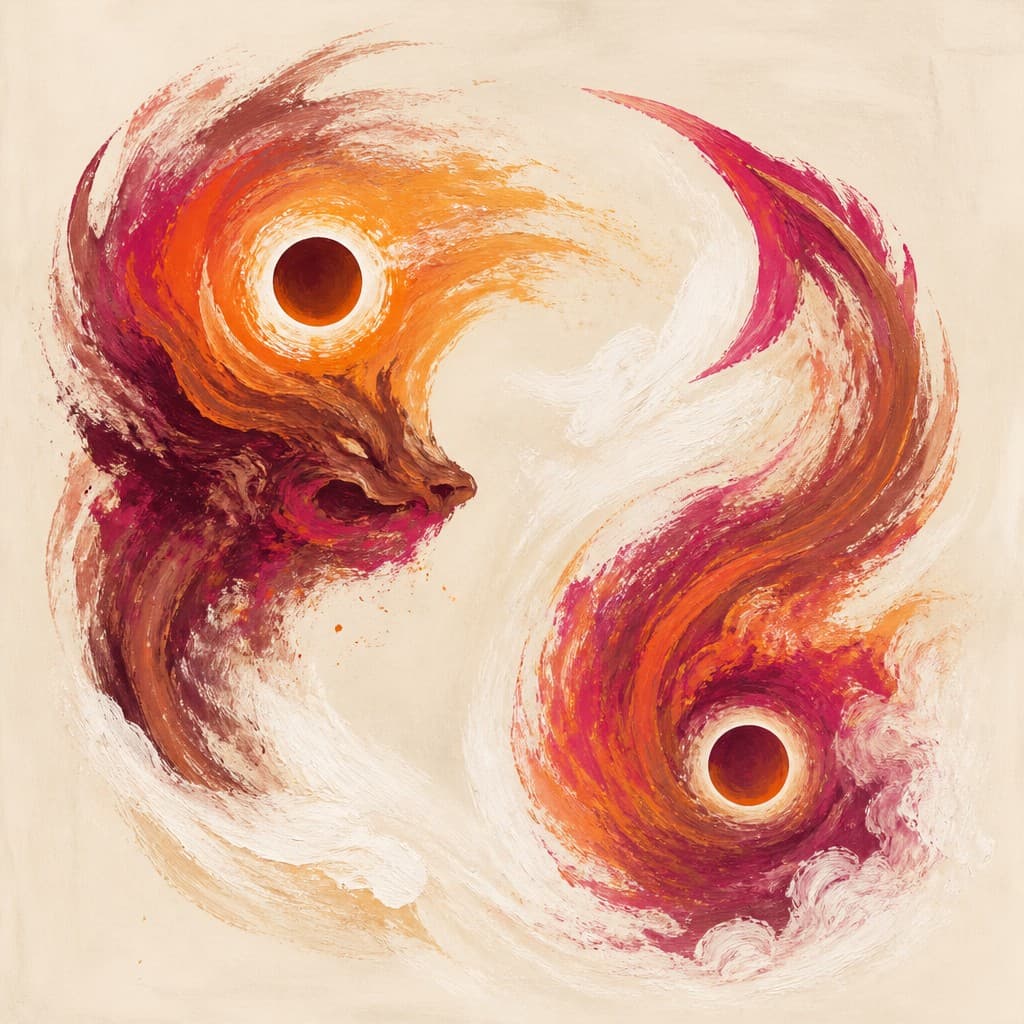 How Rahu and Ketu interplay in your chartRahu and Ketu are the two lunar nodes and always occupy opposite points in the chart. Rahu tends to increase desire and involvement, while Ketu tends to reduce attachment. A janam kundli reads both ends of the axis together.
 Benefic and malefic planets in Vedic astrologyNatural benefic and malefic classifications describe the usual tendencies of the grahas. They are a starting point, not a final judgement. House rulership, placement, strength, aspects, and dasha can change how a graha functions in a particular chart.
- Sun transits in Vedic astrologyA Sun transit, or Surya gochara, is the Sun moving through a sidereal sign for about one month in relation to your janam kundli. It can make visibility, vitality, authority, father, and honour more important for a short period.
- Moon transits in Vedic astrologyA Moon transit, or Chandra gochara, is the Moon moving through a sidereal sign in about two and a half days in relation to your janam kundli. It can describe short changes in mood, habit, sleep, family attention, and daily experience.
- Mars transits in Vedic astrologyA Mars transit, or Mangala gochara, is Mars moving through a sidereal sign for roughly six weeks, or longer when retrograde, in relation to your janam kundli. It can increase action, courage, competition, anger, conflict, or physical effort.
- Mercury transits in Vedic astrologyA Mercury transit, or Budha gochara, is Mercury moving through the sidereal signs in relation to your janam kundli. It can affect communication, study, trade, contracts, travel, calculation, and daily mental activity for a short period.
- Jupiter transits in Vedic astrologyA Jupiter transit, or Guru gochara, is Jupiter moving through a sidereal sign for about one year in relation to your janam kundli. It can support growth, study, children, teachers, travel, law, or faith, but it can also increase excess or unrealistic expectations.
- Venus transits in Vedic astrologyA Venus transit, or Shukra gochara, is Venus moving through a sidereal sign for a few weeks, or longer when retrograde, in relation to your janam kundli. It can affect relationships, pleasure, art, money, comfort, vehicles, and social ease.
- Saturn transits in Vedic astrologyA Saturn transit, or Shani gochara, is Saturn moving through a sidereal sign for about two and a half years in relation to your janam kundli. It can make work, duty, delay, limits, health, or responsibility important for a long period. Sade Sati is one specific Saturn transit.
- Rahu transits in Vedic astrologyA Rahu transit is the north lunar node moving through a sidereal sign for about eighteen months, always opposite Ketu, in relation to your janam kundli. It can increase ambition, appetite, foreign connections, technology, uncertainty, or interest in an unconventional direction.
- Ketu transits in Vedic astrologyA Ketu transit is the south lunar node moving through a sidereal sign for about eighteen months, always opposite Rahu, in relation to your janam kundli. It can reduce attachment, increase inward attention, revive an existing skill, or bring separation in the part of life it affects.