

What people mean by Vedic
Vedic often gets used as a brand for anything Indian and ancient. In a stricter sense it points to the knowledge streams that grew with the Vedas and the later sciences built around them.
Ayurveda is the medicine of that world: health, constitution, food, herbs, and daily rhythm. Jyotish, which English usually calls Vedic astrology, is the sky craft: a janam kundli, lagna, Moon, nakshatras, grahas, houses, and dasha. Calling both Vedic is fair. Treating them as one subject is not.
What Ayurveda is
Ayurveda is a system of medicine and living. It looks at the body and mind through doshas, digestion, tissues, seasons, and habit.
A practitioner may speak of Vata, Pitta, and Kapha, of agni, of sleep, of food that settles or agitates. The work is clinical and practical: how this person is built, what is out of balance now, what supports recovery. It is not a birth chart reading. It does not need the rising sign to name a meal plan, though some Ayurvedic lineages do look at the sky when they want timing.
What Vedic astrology is
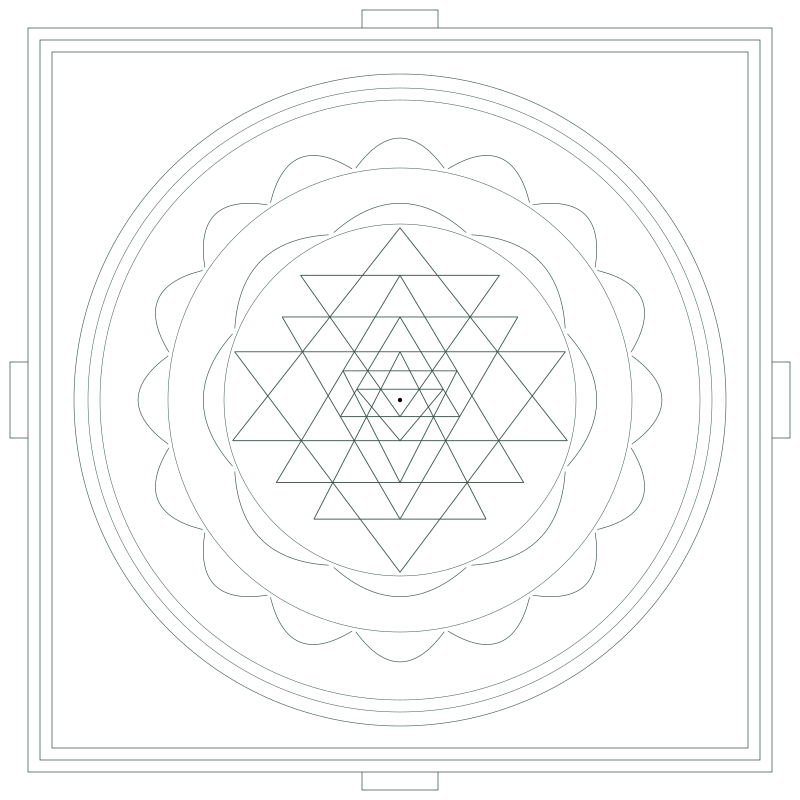
Vedic astrology, or Jyotish, reads the sidereal sky at the minute of birth. The janam kundli maps lagna, Moon, nakshatras, the nine grahas, the twelve houses, and the dasha periods that name which themes are loud in which years.
A personal reading here is about the life you are living: work, love, money, family, home, health as a life topic, study, travel, friends, meaning. It is a map of character and timing. It is not a diagnosis, a prescription, or a substitute for a doctor.
How they connect
The connection is real and old. Both sit in the same civilisational bookshelf.
Classical Jyotish texts speak of the body, temperament, and illness as part of what a chart can show. Classical Ayurveda sometimes uses planetary ideas when it talks about constitution or the right hour for a remedy. Shared language appears: the Moon and mind, Mars and heat or blood, Saturn and cold or delay, the sixth house and struggle with health. In that older world, a physician and an astrologer could read the same person from different angles. Shared roots do not merge the tools. A dosha is not a dasha. A herb is not a house.
How they differ in practice
Ayurveda asks what will help this body today and over a season. Jyotish asks what this birth map and this period tend to emphasise.
You can have a calm chart and still need medical care. You can have a difficult health house and still live carefully and well. An Ayurvedic consult may change diet, routine, or treatment. A Vedic reading names lagna, Moon, grahas, and timing, then stays with the question you brought. One does not replace the other. If someone sells a kundli as a full medical system, or sells herbs as a complete life reading, they are mixing crafts that should stay clear.
What this site is for
VedicAstrology.com calculates a sidereal janam kundli from your date, time, and place of birth, then you receive answers in a familiar messaging form.
Health can be one life area among others. That is still astrology, not Ayurveda. For the chart itself, see janam kundli. For how this sky differs from Western tropical signs, see sidereal and tropical. Bring the birth as it was. Ask about the life you are in. Keep medical questions with people qualified for them.